Chores for 7-, 8- and 9-year-olds: moving past the starter set
Somewhere between seven and nine, a child stops needing you to walk them through every job. They can read a list, follow three or four steps, and remember a task they did yesterday. This is the age to hand over more than extra jobs: hand over the list itself, so they check it, do it and tick it without you narrating each step.
What a seven-year-old can do that a five-year-old can’t
The jump isn’t mainly about strength. It’s about holding a sequence in their head, reading short instructions, and coping when a job takes ten minutes instead of two. That opens up tasks with several stages, like packing a lunch or putting the weekly shop away, and it means the list can move from pictures to words.
If your child is new to chores altogether, start with the simpler set in chores for 5 and 6 year olds for a couple of weeks before adding anything below. A confident beginner climbs faster than an overwhelmed one.
Jobs to add between seven and nine
For ages 8–10 the American Academy of Pediatrics’ chores-by-age guidance adds vacuuming, helping with dinner, making their own snacks, walking a pet, putting away their own laundry and unpacking groceries, on top of the earlier list. Several earlier-list jobs, such as making and packing a school lunch, sweeping, raking leaves and sorting laundry, also suit seven-year-olds far better than five-year-olds.
| Job | Typical first try | Teach this part first |
|---|---|---|
| Pack own school lunch | 7 | Which box holds what; the drink goes in last |
| Sweep the kitchen floor | 7 | Edges into the middle, then into the dustpan |
| Sort a laundry pile by colour | 7 | Darks, lights, towels: three heaps |
| Rake leaves into a pile | 7 | One corner of the garden, not the whole lawn |
| Put away own clean laundry | 8 | Which drawer each kind of clothing lives in |
| Unpack the grocery bags | 8 | Fridge things first, then cupboards |
| Make own after-school snack | 8 | The two or three snacks they’re allowed to make |
| Vacuum one room | 8–9 | Moving small things off the floor before starting |
| Walk the dog with a grown-up | 9 | Lead, poo bags and the route you agreed |
| Help cook dinner | 9 | Washing and measuring before any knife work |
From pictures to a list they read themselves
Reading the list alone is the real milestone at this age. Once your child checks the chart without being sent to it, you stop being the messenger for every job. Make the switch in stages so the list never feels like homework.
- Stage one: keep the pictures and add a short word under each, like “Lunch” or “Sweep”.
- Stage two: words only, in the same order every day, in big friendly letters.
- Stage three: your child ticks each job as it’s done, without showing you first.
- Stage four: they read tomorrow’s list the night before and tell you what’s on it.
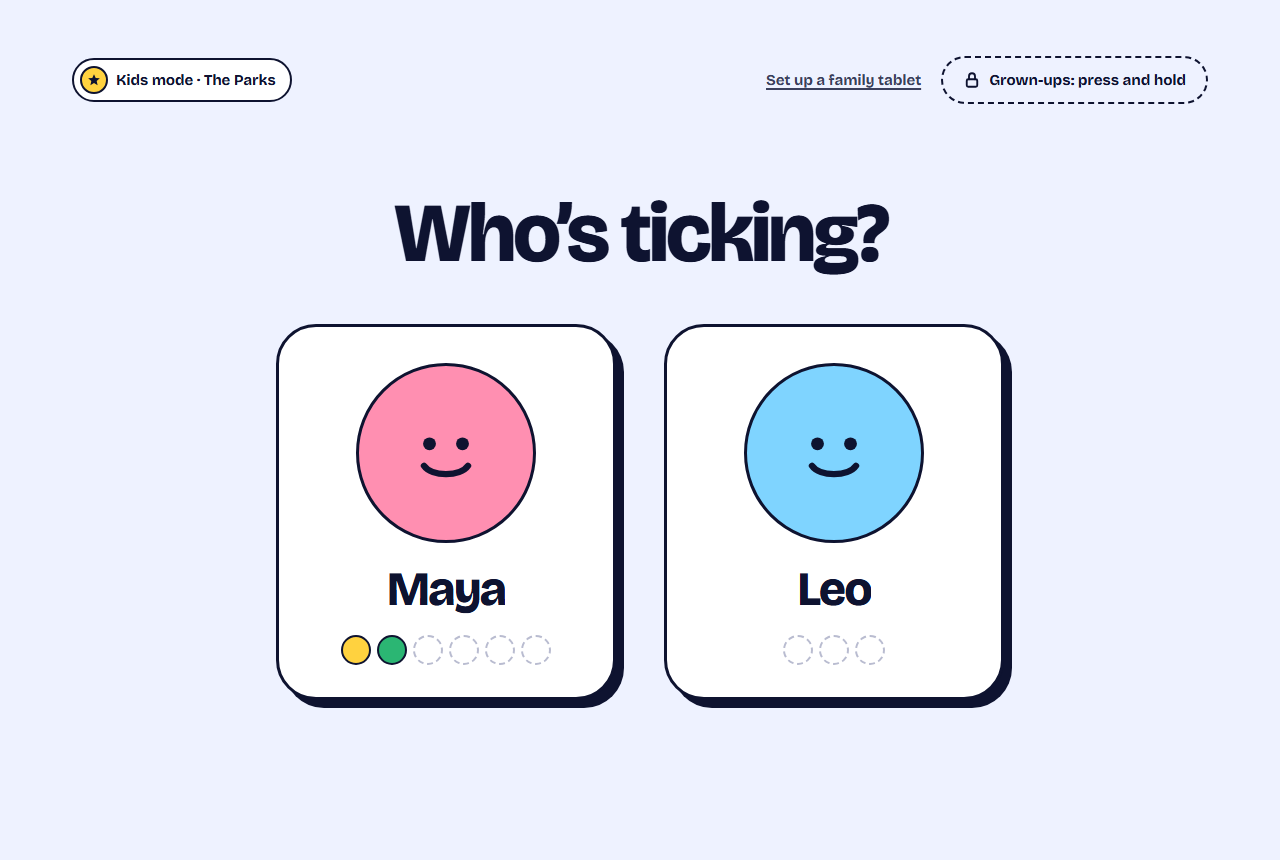
Paper works fine: print a weekly grid from the free chart maker and let them tick it with a pen hung on a string. If you’d rather keep it on a screen, a sharechores household has a kids view for a shared tablet or old phone. Your child taps their own face on the “Who’s ticking?” screen, reads their jobs, and taps the circle when each one is done. No login, no email address of their own.
Growing independence without letting go too fast
Independence grows in steps, and each step hands one more decision to your child. Moving through them too quickly is how jobs quietly stop happening; moving too slowly keeps you in the role of foreman.
| Level | You | Your child |
|---|---|---|
| Shown | Do it with them and explain each step | Copies you, asks questions |
| Supervised | Stay in the room, step in only if asked | Does every step, you watch |
| Checked | Look once it’s finished | Does it alone, then calls you |
| Owned | Glance at the ticked list | Remembers, does and ticks it |
Move up a level when a job goes well three or four times in a row. Drop back a level, without fuss, if it slips for a week. That isn’t a punishment; it’s just where the job is right now.
“Omar, you’ve packed your lunch five days running. From Monday I won’t check it, it’s yours.” “The vacuuming’s been missed twice, so I’ll come and watch again this week. Then you’re back on your own.”
Agreeing what “done” means
Seven- to nine-year-olds argue about details. “I did sweep!” can mean two strokes of the broom. Settle it before the job, not after, with a short “done means” line for each task. Write it on the chart or tape it inside the cupboard where the tools live.
The AAP suggests spelling tasks out daily and weekly and favouring encouragement over scolding. When the list says what finished looks like, you can point to it instead of debating, and praise becomes specific: “The cable’s wound up, that’s exactly right.”
Questions people ask
How many chores should an 8-year-old do?
Four or five daily jobs of a few minutes each, plus one longer weekly job such as vacuuming a room, is a reasonable load. Grow it gradually rather than all at once.
Can a 7-year-old make their own lunch?
Yes, with the food prepared within reach. Making and packing school lunches sits on the AAP list from age five; at seven many children can assemble it alone once shown.
My 9-year-old says chores are boring. Is that a problem?
Boring is fine; plenty of adult jobs are. Keep the jobs short, let them choose the order, and let them pick one new job from a short list so they own part of the plan.
When should they get bigger jobs like cleaning the bathroom?
Usually from ten or eleven, when they’re ready to own a whole job from start to finish rather than one step of it.