Chores for 10-, 11- and 12-year-olds who are ready for bigger jobs
By ten, most children can do far more than wipe a table. The shift worth making now is from tasks to whole jobs: not “put the towels in the machine” but “the towels are yours, from the hamper to the cupboard”. Ownership is what turns a helper into someone the household actually relies on, and it’s the habit that matters most before the teenage years.
Tasks versus whole jobs
A task is one step someone else planned. A whole job includes noticing it needs doing, gathering the supplies, doing every step, putting things back and saying it’s finished. Most adult friction over housework lives in those surrounding steps, so this is the age to teach them.
| As a task | As a whole job |
|---|---|
| Load the washing machine | Notice the hamper is full, wash, dry, fold and put the load away |
| Wipe the bathroom sink | Clean the sink, mirror, toilet and floor, then restock the loo roll |
| Stir the pasta | Plan a simple meal, cook it with you nearby, clear up after |
| Hand me the sheets | Strip the bed, wash the sheets, make the bed again |
Bigger jobs that suit ten to twelve
For ages 11–12, the AAP’s age-appropriate chores page lists cleaning the kitchen, changing bedsheets, unloading the dishwasher, doing and folding laundry, scrubbing toilets and cleaning the bathroom, washing the car, cooking a simple meal with supervision, and watching younger siblings while an adult is at home. Ten-year-olds can start most of these with more help.
| Job | Minutes | How often | Grown-up role |
|---|---|---|---|
| Unload the dishwasher | 10 | Daily | Sharp knives stay yours at first |
| Kitchen after dinner | 15–20 | Two or three nights | Agree what “clean” includes |
| Change own bedsheets | 15 | Weekly | Help with the duvet cover early on |
| One laundry load, start to finish | 20 active | Weekly | Set the machine together the first few times |
| Clean the bathroom | 20–30 | Weekly | Pick the products; gloves on |
| Wash the car | 30 | Monthly | Show which sponge goes where |
| Cook a simple meal | 30–45 | Weekly | In the kitchen, hands off unless needed |
| Keep an eye on a sibling | Varies | Occasionally | You stay in the house |
Three whole jobs, broken down
Write the steps once, tape them where the job happens, and remove the sheet when your child no longer looks at it. Here are three to adapt.
The bathroom
- Clear the surfaces: toothbrushes in the cup, bottles on the shelf.
- Spray the sink, bath and toilet; let the spray sit while you do the mirror.
- Wipe the mirror, then the sink, then the bath, top to bottom.
- Toilet last: brush inside, cloth outside, seat and handle too.
- Sweep or wipe the floor, swap the towels, refill the toilet roll.
- Put the bucket away and tick the job.
One laundry load
- Check pockets, sort by colour, fill the drum loosely.
- Detergent in, the setting you agreed, press start.
- Hang or tumble as soon as it finishes so nothing sits damp.
- Fold and deliver each pile to its owner’s bed.
A simple meal
- Choose from three meals you’ve cooked together before, such as pasta with sauce, omelettes or tacos.
- Check the ingredients the day before and add gaps to the shopping list.
- Cook with you in the room; you handle anything they aren’t confident with yet.
- Clear up as they go, wipe the hob and load the dishwasher afterwards.
Handing over ownership for real
Ownership means your child decides some of the when and the how, within a deadline you set. “The bathroom is done by Saturday lunch” leaves room for them to choose Friday evening. Hovering over every step takes the ownership straight back.
“Priya, from this week the bathroom is your job. It needs doing by Saturday at 12. You pick when. The steps are on the cupboard door. When it’s done, tick it and I’ll have a look with you.”
Check the result together the first few weeks, then less often. When something is missed, point to the step rather than the child: “The towels didn’t get swapped” lands better than “You always forget the towels”.
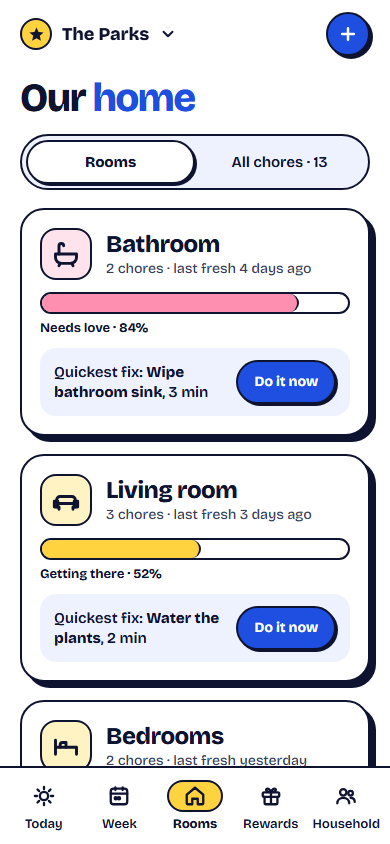
In a sharechores household, each room carries a “how dirty is it” meter that fills over the days since its chore was last ticked and empties when it’s done. Instead of asking, you can show your child the bathroom bar creeping up and let them pick their own moment before Saturday.
Fitting bigger jobs around a fuller week
Ten- to twelve-year-olds often have clubs, sport and more homework. The AAP is plain that busy children still need family duties, so keep the job and change the day instead. Give the weekly jobs to quieter evenings or the weekend, and keep the daily ones small.
If you’re building the household list from scratch, sketch it first in the free chore chart maker and print the week, so the plan lives on the wall rather than in your head.
Questions people ask
Can an 11-year-old clean a bathroom properly?
Yes, once shown. Scrubbing toilets and cleaning the bathroom appear on the AAP list for 11–12. Choose the products yourself, keep gloves handy and check together for the first few weeks.
Should a 10-year-old do their own laundry?
Putting away their own clean laundry suits eight and up; running a full load is listed for 11–12. A ten-year-old can start with sorting and loading while you set the machine.
Is it fair to ask an older child to watch younger siblings?
Occasionally, with a grown-up at home, it builds trust. Keep it short, tell both children what the rules are, and don’t let it become the older child’s permanent job.
How do I stop checking every job?
Agree what finished looks like, check together for a few weeks, then check only now and then. If quality slips, go back to checking for a short spell.